Why One Mechanical Can Undo a Mixed Relay Team
Italy won World Championship mixed relay gold; the format's fragility is what actually explains the podium.
The Peloton Desk
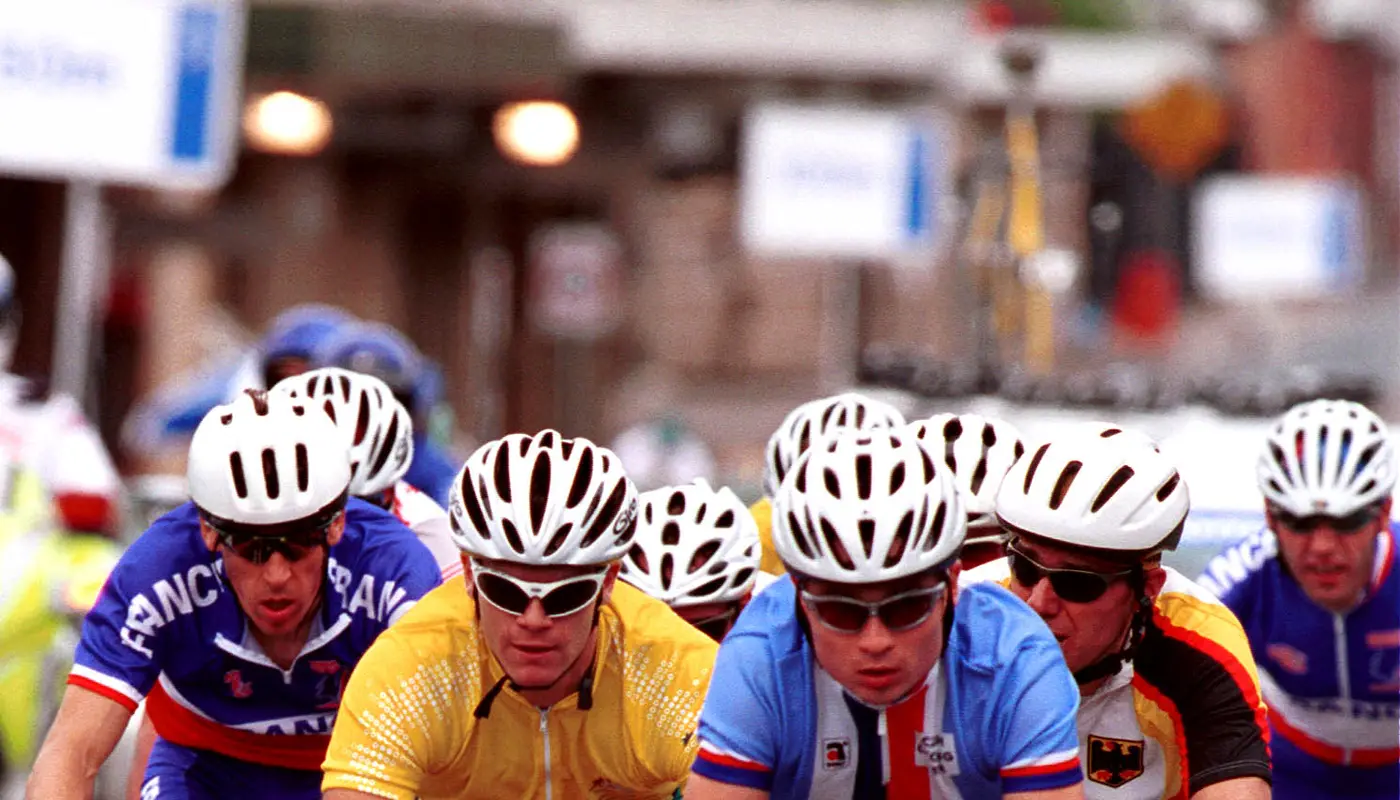
Italy took its first World Championship gold in the mixed relay time trial in Montreal, with strong rides from Filippo Ganna and Elisa Longo Borghini carrying the team ahead of France, while defending champions Australia finished off the podium after a mechanical for Baker and Switzerland took bronze despite losing Stefan Küng to an early mechanical of his own, as reported by Cyclingnews.
Three separate reports from the same race all circle the same fact: mechanicals, not fitness, decided the podium order. That is not incidental colour. It is the format working exactly as designed, for better and worse.
The Format Punishes What It Cannot Measure
A mixed relay time trial asks six riders — split by gender, riding in sequence over set distances — to hand off a single, unbroken effort like a baton. There is no draft to hide in beyond the teammates you started with, no group to regroup with if you flat or snap a mech hanger. Each rider’s split is added to the clock the moment they cross their line, and the team’s time is fixed by whoever is on the road when the changeover happens, mechanical or not.
That structure means the event measures two things at once: raw wattage, which is what broadcasters and fans watch, and mechanical margin, which nobody sees until it fails. Australia are two-time champions with the legs to prove it, and they still walked away without a medal because Baker’s bike failed at the wrong metre marker. Switzerland took bronze despite losing Küng early — a rider whose absence from a full-strength lineup would normally be decisive — because Marlen Reusser and the rest of the Swiss squad had enough depth in hand to absorb the loss and still out-ride two other nations to the line.
Why Italy’s Win Is Structural, Not Lucky
Italy’s gold, with Ganna and Longo Borghini both delivering big rides, reflects a squad built with redundancy: strength distributed across both halves of the relay rather than concentrated in one or two stars. In a discipline where a single mechanical failure can cost a podium spot regardless of who’s riding, that redundancy is the real competitive edge — not marginal aerodynamic gains or one exceptional split. Longo Borghini’s first rainbow jersey, after a career built mostly on the classics and stage races, is a personal landmark, but the team result underneath it is the more useful lesson for anyone trying to understand why relay results diverge so sharply from what individual time trial form would predict.
The mixed relay rewards teams that can lose a rider’s best day and still finish strong. That is a different skill from winning bike races, and it is why the same names keep appearing across podiums for very different reasons each year.
Reported at Cyclingnews; analysis ours.
Newsletter
Cycling news at full speed
Get The Peloton in your inbox. No spam, and one click to leave.
Every morning · Unsubscribe any time. We never sell or rent your address; read the privacy policy.